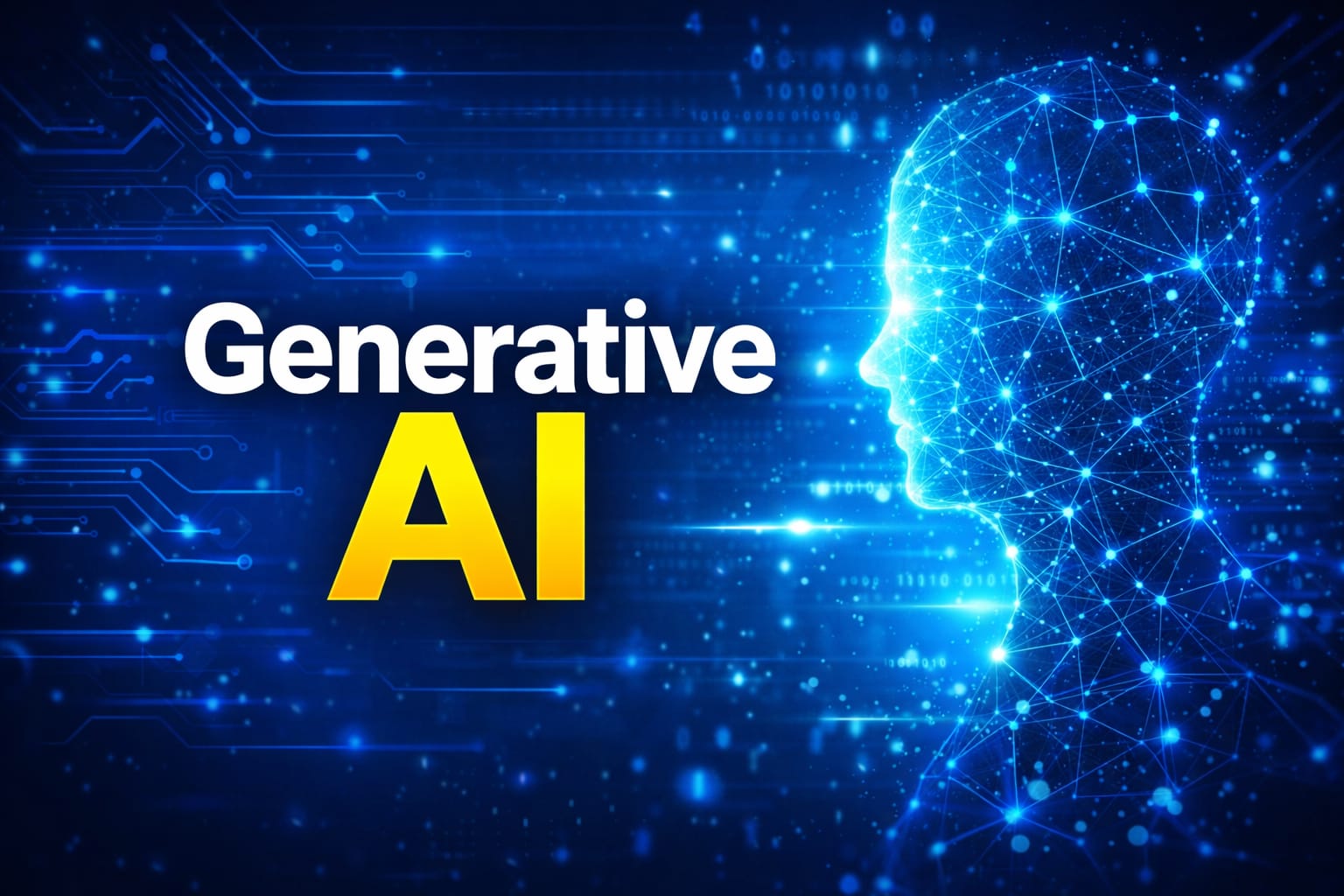
Generative AI is one of the most groundbreaking advancements in artificial intelligence (AI) today. Unlike traditional AI systems that primarily analyze data, generative AI has the ability to create new content, including text, images, music, and even video. This technology is transforming industries such as education, entertainment, software development, marketing, and creative arts.
What is Generative AI?
Generative AI refers to AI models that learn patterns from existing data and generate new, original content based on that knowledge. For example, it can:
- Write articles or stories (like AI writing assistants)
- Generate realistic images or artwork
- Compose music
- Create videos or animations
These systems use techniques like Generative Adversarial Networks (GANs) and transformer-based models (like GPT, BERT) to produce outputs that often mimic human creativity.
Applications of Generative AI
- Content Creation: Automating writing, video editing, and image generation for blogs, social media, and marketing.
- Entertainment: Producing music, art, or game environments without human intervention.
- Healthcare: Designing drug molecules, predicting protein structures, or generating medical imaging data.
- Business and Marketing: Creating personalized advertising campaigns and customer engagement tools.
- Education: Generating interactive learning content and tutoring systems.
Advantages of Generative AI
- Efficiency: Saves time and reduces manual work in creative processes.
- Innovation: Enables ideas and content that may not have been possible manually.
- Scalability: Can generate large volumes of content quickly.
Challenges and Ethical Concerns
While generative AI has immense potential, it also raises concerns:
- Misinformation: Deepfake videos and fabricated content can spread false information.
- Copyright Issues: Generated content may infringe on existing works.
- Job Displacement: Automation of creative tasks could affect certain professions.
Conclusion
Generative AI is revolutionizing the way we create and interact with digital content. Its applications are vast, from creative arts to science and business. However, balancing innovation with ethical considerations is key to leveraging its full potential.