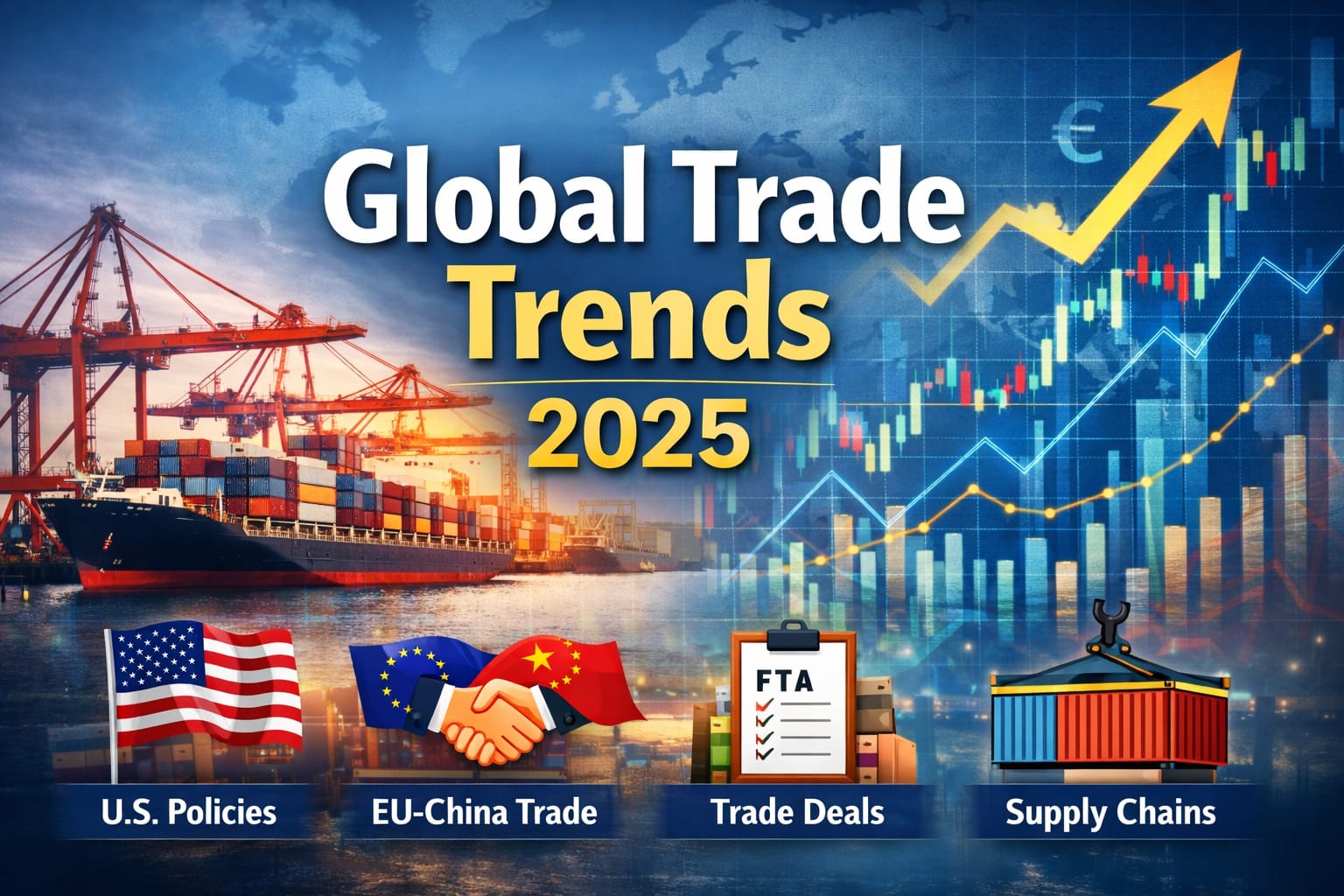
The global trade landscape in 2025 is marked by significant changes, strategic partnerships, and evolving market dynamics. From shifting trade growth patterns to emerging policies, businesses and investors need to stay informed to navigate this complex environment.
1. Slower Yet Steady Global Trade Growth
Despite geopolitical tensions and economic uncertainty, global trade continues to grow, though at a slower pace than in previous years. Experts note that financial volatility, changing demand patterns, and supply chain disruptions have contributed to this moderation.
Businesses are advised to monitor trade flow data and adapt their strategies to maintain competitiveness in this evolving landscape.
2. U.S. Trade Policies Gain Attention
The United States remains a central player in global trade discussions. Key developments include:
- WTO Reforms: U.S. policymakers continue to question the efficiency of the World Trade Organization, pushing for reforms that align with current global trade realities.
- Stronger Enforcement: U.S. authorities have increased monitoring of imports to prevent fraud and ensure compliance with tariffs and trade regulations.
These measures reflect a stronger stance on protecting domestic industries and enforcing fair trade practices.
3. Europe Rebalances Trade With China
European countries are actively seeking to rebalance trade relations with China. Instead of relying solely on tariffs, the EU focuses on enhancing competitiveness, promoting innovation, and enforcing fair trade practices.
This approach emphasizes sustainable growth while reducing dependency on a single trade partner.
4. Bilateral Trade Agreements Expand
Even amid uncertainties, countries continue to forge new trade deals. Notably, the UK recently upgraded its trade agreement with South Korea, improving access to services and digital markets.
Such agreements demonstrate the importance of diversifying trade partnerships and securing new market opportunities.
5. Emerging Economies Navigate Protectionism
Countries like India are carefully negotiating to protect national interests amid growing protectionist measures worldwide. Officials warn that trade is increasingly “weaponized” through tariffs, urging strategic planning to safeguard economic growth.
Businesses operating in emerging markets must stay alert to policy changes to minimize risks.
6. Supply Chain & Logistics Signals
Port activity and logistics data provide a window into trade health. In the U.S., major ports report steady volumes, though uncertainty from policy changes affects operational planning.
Companies are increasingly investing in flexible supply chains to respond quickly to global trade shifts.
7. Using Google Trends for Trade Insights
Google Trends has become a useful tool for understanding market and consumer sentiment. By tracking search interest in terms like “trade war,” “tariff news,” or “supply chain disruption,” businesses can gain early insights into emerging trade concerns and opportunities.
For example, spikes in search trends often align with policy announcements or global economic events, offering actionable intelligence for decision-makers.
Key Takeaways
- Trade growth is slowing, but opportunities remain for informed businesses.
- Policy and enforcement actions are shaping the global trade environment.
- Regional agreements and diversification are increasingly critical.
- Data tools like Google Trends help track real-time interest and market sentiment.
Staying updated on trade news and trends allows businesses, investors, and policymakers to make better decisions, remain competitive, and adapt to an ever-changing global marketplace.